
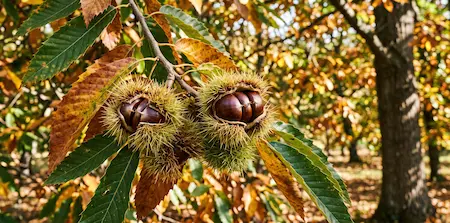
Chestnuts are a unique, nutrient-dense survival crop and a highly valued addition to home food forests and sustainable agriculture. Unlike most traditional nuts like pecans and walnuts, chestnuts are naturally low in fat (roughly 1–2 grams per 100-gram serving) and rich in complex carbohydrates (about 53 grams per 100-gram serving), offering a soft, mildly sweet texture closer to a potato. A 100-gram edible portion of roasted chestnuts provides approximately 240 calories and 3–4 grams of protein.
History & Legacy in Alachua
In 1962, Dr. Robert Dunstan began breeding American chestnuts in Alachua, Florida, to restore the species after blight pushed it near extinction. His efforts resulted in the Dunstan Chestnut, a blight-resistant hybrid producing large, nutritious nuts that benefit wildlife, people, and the land. Today, that heritage continues at locations like TJ's Food Forest & Apiary, where legacy chestnut orchards are integrated into U-Pick operations and regenerative food systems.
Culinary Preparation & Recipes
- Classic Oven-Roasted Chestnuts: Heat oven to 400°F. Score an "X" on the rounded side of each shell, place cut-side up on a baking sheet, and roast for 20–25 minutes until shells curl back. Wrap in a clean towel for 5 minutes, peel while warm, and toss with melted butter and salt.
- Cinnamon-Glazed Chestnuts: Melt 2 tbsp butter in a skillet over medium-low heat with 3 tbsp brown sugar, 2 tbsp water, 1/2 tsp cinnamon, and a pinch of salt. Add 2 cups cooked, peeled chestnuts and cook 5–7 minutes until glossy. Remove from heat, stir in 1/2 tsp vanilla, and serve warm over ice cream or oatmeal.
Chestnut & Herb Stuffing: Sauté onion and celery in butter, then combine with 2 cups chopped cooked chestnuts, sage, thyme, 10 cups bread cubes, broth, and eggs. Bake at 350°F in a buttered dish for 25 minutes covered, then 10–15 minutes uncovered until golden (reaching 165°F internally).