
Yellow Jackets: Everything You Need to Know
Yellow jackets are a common sight during late summer and early autumn. Known for their striking black-and-yellow bands, these predatory insects play a dual role in our ecosystem: they are beneficial pest controllers, but they can also become aggressive pests when protecting their nests or scavenging for food.
What Are Yellow Jackets?
Yellow jackets are social wasps belonging to the genera Vespula and Dolichovespula. Unlike honeybees, which die after stinging once, a single yellow jacket can sting multiple times because its stinger is smooth rather than barbed.
Key physical characteristics include:
- Distinct Patterns: Bright yellow and black segmented bodies with minimal hair.
- Compact Size: Most workers measure about 0.5 inches in length, while queens are slightly larger.
- Fast Flight: Rapid, side-to-side flying patterns when approaching food sources or nests.
Nesting Habits and Life Cycle
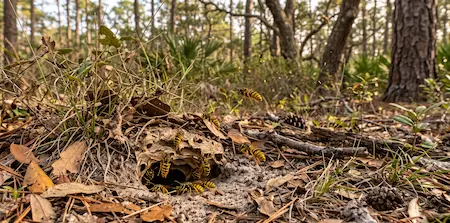
Understanding where yellow jackets live is essential for avoiding accidental encounters. Most species build subterranean nests in abandoned rodent burrows, tree stumps, or hollow logs. However, some species build aerial nests under eaves, inside wall voids, or hanging from tree branches.
A colony's lifecycle follows an annual pattern:
- Spring: A fertilized queen emerges from winter hibernation to build a small nest and lay her first brood of worker females.
- Summer: Worker yellow jackets take over foraging and nest expansion. The colony grows rapidly, often reaching thousands of individuals.
- Late Summer & Autumn: As natural protein sources decline, yellow jackets shift their diet toward sweet liquids and human food, making outdoor gatherings a target.
- Winter: The old queen and workers die off. Newly mated queens find sheltered spots to hibernate until spring.
Diet and Ecological Role
Despite their aggressive reputation, yellow jackets provide important ecological services. During spring and early summer, workers forage for proteins to feed developing larvae. They actively hunt garden pests such as caterpillars, flies, and grubs, serving as natural pest control agents.
In return, larvae secrete a sugar-rich liquid that feeds adult workers. When larval production slows in late summer, workers search for carbohydrates elsewhere—targeting fallen fruit, soda cans, and garbage cans.
Why Are Yellow Jackets Aggressive?
Yellow jackets are fiercely protective of their nests. If a nest is disturbed by footsteps, lawnmowers, or vibration, guardians release alarm pheromones that trigger a group attack. Because they can sting repeatedly without losing their stinger, multiple stings can occur in seconds.
Tips for Prevention and Safe Coexistence
To minimize interactions with yellow jackets around your home, consider these effective strategies:
- Cover Food and Drinks: Keep outdoor food containers tightly sealed, especially sugary drinks and meat items.
- Secure Garbage Cans: Ensure trash receptacles have tight-fitting lids and are cleaned regularly.
- Avoid Swatting: Swatting at a yellow jacket can crush it, releasing alarm pheromones that attract others nearby. Gently brush it away instead.
- Professional Removal: If a nest poses a threat near high-traffic areas, contact professional pest management rather than attempting DIY removal.