
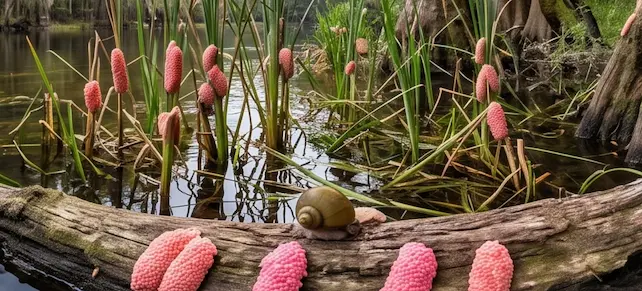
Whether you are out on a boat or taking a peaceful walk along the banks of a Florida lake, you might have noticed unusual clusters of eggs perched just above the water's surface on vegetation or structures. These distinctive clutches belong to apple snails. While conducting routine fish surveys, freshwater fisheries biologists frequently encounter two types of clutches: one from a native species and one from an invasive, exotic species. Understanding the differences between them is crucial for maintaining our local ecosystems.
Quick Facts: Egg Identification
| Feature | Native Florida Apple Snail | Exotic Island Apple Snail |
|---|---|---|
| Egg Color | White | Pink / Bright Pink |
| Egg Size | Approx. pea-sized | Approx. pinhead-sized |
| Quantity per Clutch | 20–80 eggs | Up to 2,000 eggs |
Ecological Impact and Highlights
"Exotic and invasive species succeed due to their rapid reproduction rate and high fecundity in our opportune climate."
The massive difference in reproductive output between the two species is staggering. While our native snails play a balanced role in the environment, the invasive island apple snail can quickly overwhelm a habitat. Their dense, pink egg clutches are a visual signal of their potential to outcompete native wildlife for food and space. This rapid growth puts immense pressure on Florida's unique freshwater biodiversity.
"NEVER release aquarium species in the wild."
Prevention is the most effective tool in managing invasive species. Many of these exotic snails find their way into our waterways through the illegal or accidental release of aquarium pets. Once established, they are incredibly difficult to eradicate. By choosing to never release aquarium species into the wild, you are helping to protect Florida's natural beauty and the health of its aquatic life for future generations.
To learn more about the biology of Apple Snails and how you can help identify and report invasive species, visit Florida Fish and Wildlife Conservation Commission.