

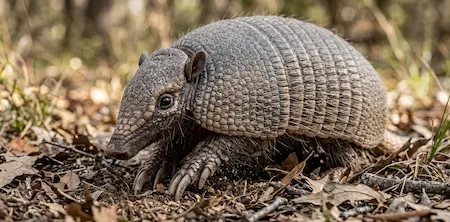
The Nine-Banded Armadillo: Nature’s Unique Survivor
The nine-banded armadillo (Dasypus novemcinctus) is one of the most distinctive mammals in North America. Often described as looking like a small, leathery cat, they are named for the nine flexible breaks in their armor-like hide. These fascinating creatures typically grow to be 15 to 17 inches long and weigh between 8 and 17 pounds. While they were originally native to more southern regions, they have expanded their range significantly, reaching Florida by the 1920s.
You can find these resilient mammals in forests and semi-open habitats where the soil is fine-textured. This soft ground is essential because armadillos are master excavators. A single armadillo may maintain several different burrows, each with multiple entrances to provide a quick escape from predators. Despite their tough exterior, they have very poor eyesight and rely on their other senses to hunt for a diet of insects, plants, and various invertebrates, primarily under the cover of night.
Biological Wonders: Identical Quadruplets
One of the most incredible traits of the armadillo is its reproductive process. In a biological feat that differs from almost all other mammals, the female armadillo produces a single egg that splits into four identical offspring. This means that every time an armadillo gives birth, she welcomes identical quadruplets that are either all male or all female.
Aquatic Acrobatics and Survival Skills
Don’t let their heavy appearance fool you; armadillos are surprisingly adept at navigating water. To cross narrow streams, they can simply hold their breath and walk along the bottom underwater. For wider bodies of water, they have a specialized trick: they inflate their stomachs to twice their normal size, providing enough buoyancy to swim across the surface. When they aren't swimming, they use their powerful legs to jump high into the air when startled before sprinting toward the safety of a nearby burrow.
Managing Armadillos in Your Yard
While they are fascinating to watch, an armadillo's prolific rooting and burrowing can be a headache for homeowners, often damaging lawns and flower beds. If you’re looking to protect your garden, consider these practical tips:
- Manage Moisture: Keep watering and fertilization to a minimum. Moist soil attracts the earthworms and larvae that armadillos love. Watering in the morning allows the soil to dry by evening, making it less attractive to these nocturnal foragers.
- Fencing: For high-value areas, use fencing at least 2 feet high with an additional 18-inch apron buried underground to prevent digging.
- Clean Up Fruit: Armadillos are drawn to fermenting fruit, so be sure to remove fallen fruit from the ground promptly.
If an armadillo has already set up camp under your house or in your yard, "harassing" the burrow can often convince them to move on. Placing a bright spotlight or a radio near the entrance (without blocking their exit) makes them feel unsafe and encourages them to find a new home without the need for expensive eradication.
Legal and Professional Assistance
It is lawful for landowners to humanely trap or destroy nuisance armadillos, but relocation is rarely effective as the animals often do not survive. All captured armadillos must be euthanized or released on-site or on a large property within the same county with permission. For further technical assistance, it is always best to contact your local FWC regional office. By understanding these unique survivors, we can better appreciate their place in our ecosystem while effectively managing our shared spaces.