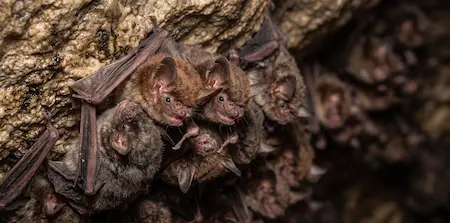
Locally, when we discuss bats, we need to think about Lubee Bat Conservancy. Lubee Bat Conservancy is an AZA-accredited nonprofit organization dedicated to saving bats and their habitats through conservation, education, and awareness, with a focus on children and community engagement. Based in Gainesville, Florida, Lubee works to protect bat species worldwide while fostering understanding and appreciation for these essential and often misunderstood animals.
Florida is home to a rich variety of wildlife, and among its most beneficial—yet frequently misunderstood—inhabitants are bats. In Florida, there are 13 native bat species, alongside 7 “accidental” species that have only a few recorded occurrences in the northern or southern extremes of the state (Marks and Marks 2006). These flying mammals play vital roles in maintaining healthy ecosystems and supporting local agriculture throughout the Sunshine State.
Ecologically and economically, bats provide invaluable services. All of Florida’s native bats are insectivorous, meaning their diet consists entirely of insects. Night after night, they consume vast quantities of beetles, mosquitoes, moths, and other agricultural and garden pests. In fact, a single bat can eat hundreds of insects in just one night! By naturally suppressing pest populations, bats reduce the need for chemical pesticides, protecting crops and making outdoor life much more comfortable for Florida residents.
Despite their immense value, Florida’s bats face serious challenges. One of the primary threats is habitat loss, as urban development and land clearing reduce the availability of natural roosting sites such as hollow tree cavities, peeling bark, and dead palm fronds. Beyond state borders, bats face an even more devastating crisis: white-nose syndrome (WNS). This fungal disease has killed millions of cave-roosting bats across North America and continues to spread rapidly. While WNS has not yet been detected in Florida as of early 2018, it remains a severe potential threat to local populations.
Fortunately, conservation efforts and community support can make a major difference in ensuring these essential creatures thrive.
Key Highlights: How You Can Help Bats Thrive in Florida
- Educate others: Spread the word about how bats help communities by controlling mosquito populations and protecting crops.
- Preserve habitats: Leave snag trees, hollow trunks, and dead palm fronds intact whenever safe to provide natural roosts.
- Install artificial roosts: Put up an approved bat house in your yard or community space to offer secure shelter.
- Monitor health: Report unusual bat behavior or signs of disease to state wildlife officials.
- Prevent fungal transport: Never take footwear, clothing, or gear used in out-of-state caves into Florida caves.
Public health and safety are also important considerations when discussing bats. While bats are gentle and pose little direct threat to humans, they can carry rabies, a serious viral disease transmitted through bites. However, rabies affects only a tiny fraction of wild bats—perhaps only one in every few hundred across Florida's populations. As a general safety rule, members of the public should never handle bats, regardless of whether the animal appears healthy, sick, injured, or dead. If direct contact occurs or if you have questions regarding public health concerns, contact your local county health department, the Florida Department of Health, or the Centers for Disease Control and Prevention (CDC).
Understanding legal protections is another essential component of bat conservation in Florida. Under Florida Administrative Code rule 68A-4.001 (General Prohibitions), it is strictly illegal to kill bats. Because bats are particularly vulnerable when roosting inside human structures, additional protections are established under rule 68A-9.010 (Taking Nuisance Wildlife). This rule explicitly prohibits using poisons or pesticides to harm or deter bats and outlines specific guidelines for safe, humane exclusions. If bats have taken up residence in your home, consult the official Bats in Buildings guide to learn legal, effective steps for management.
By recognizing the vital role bats play and respecting state regulations, Floridians can foster a safer, more sustainable environment for both humans and wildlife alike.